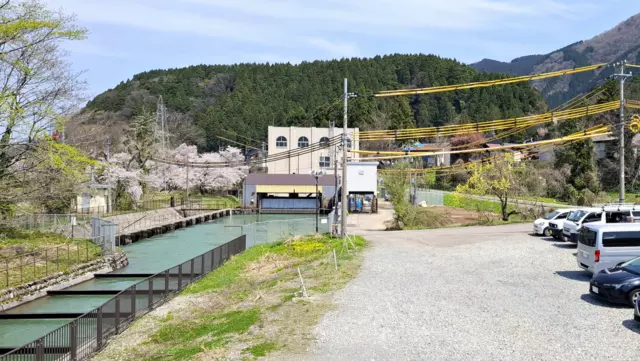
In western Japan, where the natural forces of Hakusan National Park meet centuries-old engineering, a significant milestone for sustainable and future-proof hydropower use was reached in June 2025. In harmony with the environment, the existing structures, and the cultural context, the Shirayama hydroelectric power plant on the Tedori River was comprehensively modernized. With a focus on ecological responsibility, regional value creation, and technical precision, Voith, Fuji Electric, and Hokuriku Electric Power Company have sent a strong signal for a sustainable energy future in the East Asian region.
Originating in the Hakusan Mountains, the Tedori River has played an important role in the region's energy supply for decades and has also shaped the landscape. Its high sediment content, variable discharge volumes, and distinctive topography place special demands on hydropower projects. At the Shirayama site, nestled in this challenging river landscape, an existing small power plant was modernized with careful consideration of hydrological, ecological, and structural conditions. The new turbine – a vertical semi-spiral Kaplan turbine – was integrated into the existing powerhouse and forms the core of a technically and functionally redesigned system that blends harmoniously into the existing structure. The existing civil structure around Shirayama, traditionally characterized by crafts, light industry, and a deep-rooted awareness of nature, is vigorously pursuing the ambitious climate targets of Japan's energy policy. With the clear goal of CO2 neutrality by 2050, Hokuriku Electric Power is setting its course for a climate-friendly energy future – through innovative technologies and the further development of existing infrastructure.
Technical data
- Turbine Type: Kaplan
- Installation Type: vertical
- Head: 6.3 m
- Water Flow: 30 m³/s
- Power: 1684 kW
- Operating hours/year: approx. 8000
- Runner diameter: 2.4 m
Implementation with tact and sensitivity
The Shirayama project was implemented as part of a cross-border collaboration between the project teams at Voith, Fuji Electric, and the end customer, Hokuriku Electric Power Company. As early as already in the planning phase, technical, regulatory, and cultural requirements were jointly assessed in regular meetings and integrated into the project concept. In the course of development, the consideration of market-specific requirements in Japan – for example, with regard to redundancy specifications, environmental compatibility, and manufacturing tolerances – proved to be a complex interface between design, quality assurance, and implementation. Project management – from contract negotiations in 2021, two formalized factory acceptance tests with delegations from Japan to commissioning in June 2025 – was characterized by close coordination, detailed planning, and consistent documentation. The assembly phase was accompanied by an experienced project supervisor from Austria, who acted as an interface between engineering and execution on site. The physical presence on site made it possible to clarify technical queries immediately and to ensure compliance with the project-specific processes and quality standards.
Overall concept in existing buildings – hydraulic design meets efficiency
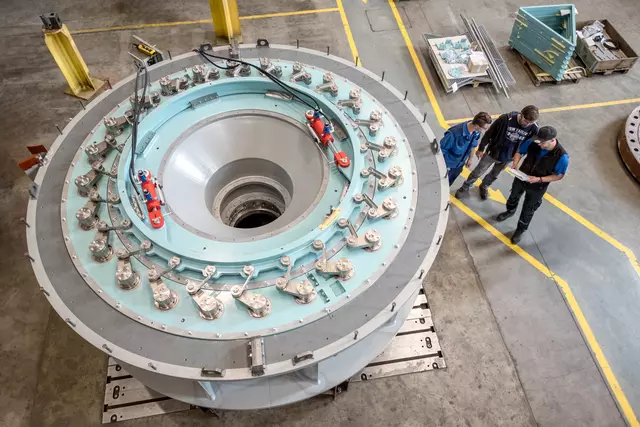
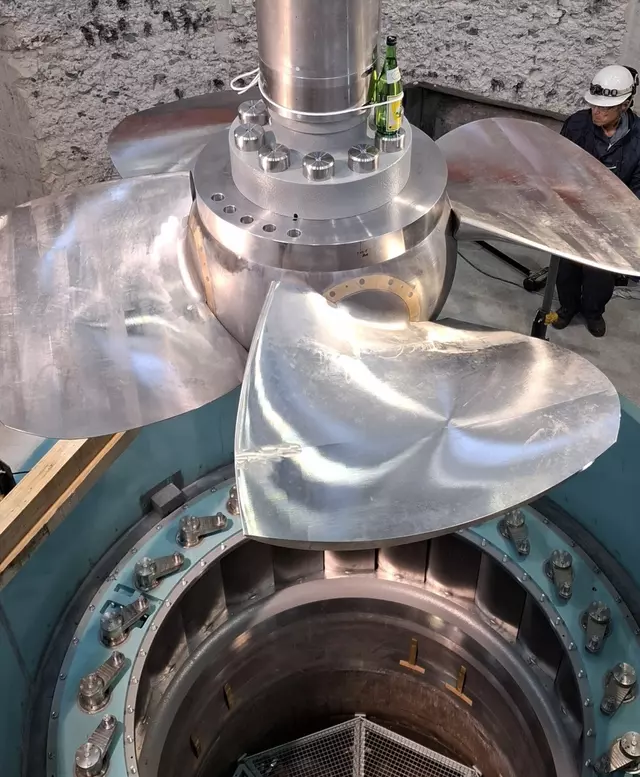
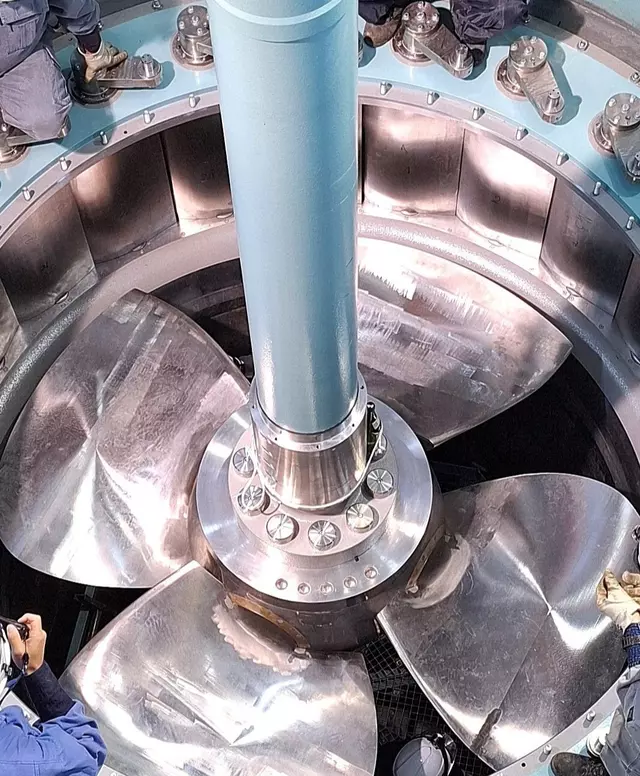
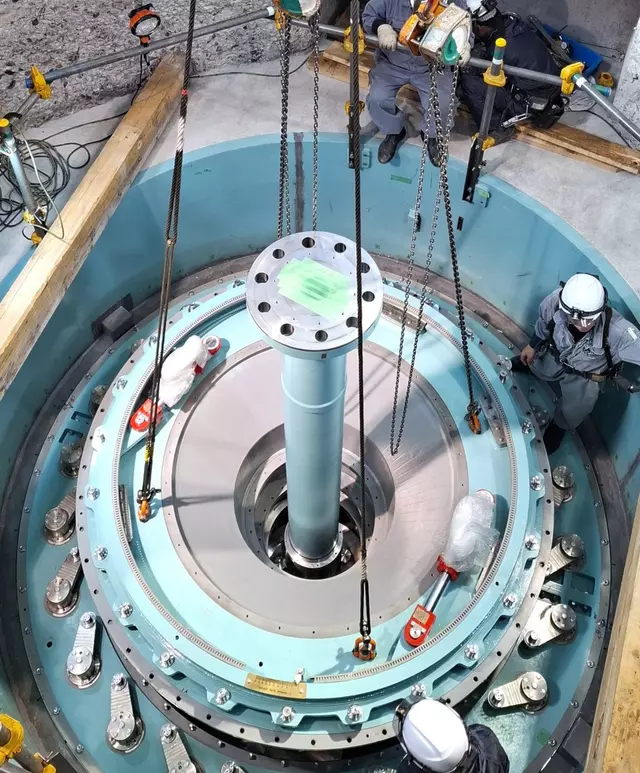
At the heart of the technical upgrade is a vertical Kaplan turbine with an runner diameter of 2.4 meters, which has been precisely tailored to the existing structure. With a net head of 6.3 meters, a nominal flow rate of 30 m³/s, and an installed capacity of 1684 kW, the plant is designed for a high annual operating time of around 8000 hours – a design that aims at maximizing energy production at a stable water volume and continously regulating the water level in the river.
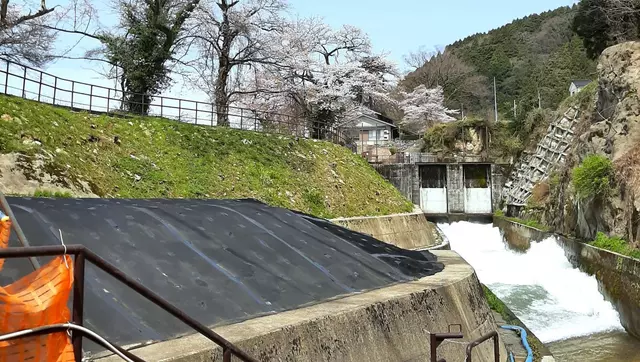
The directly coupled, air-cooled synchronous generator is tuned to the Japanese grid frequency of 60 Hz and operates at a rated speed of 171.4 rpm – a parameter that takes into account both hydromechanical optimization as well as grid stability requirements. The technology enables consistently high power production and contributes to stabilizing the water level in the river. The water intake is located about 200 meters upstream of the powerhouse and consists of a compact weir that dams the Tedori River laterally and transfers it to the headrace.
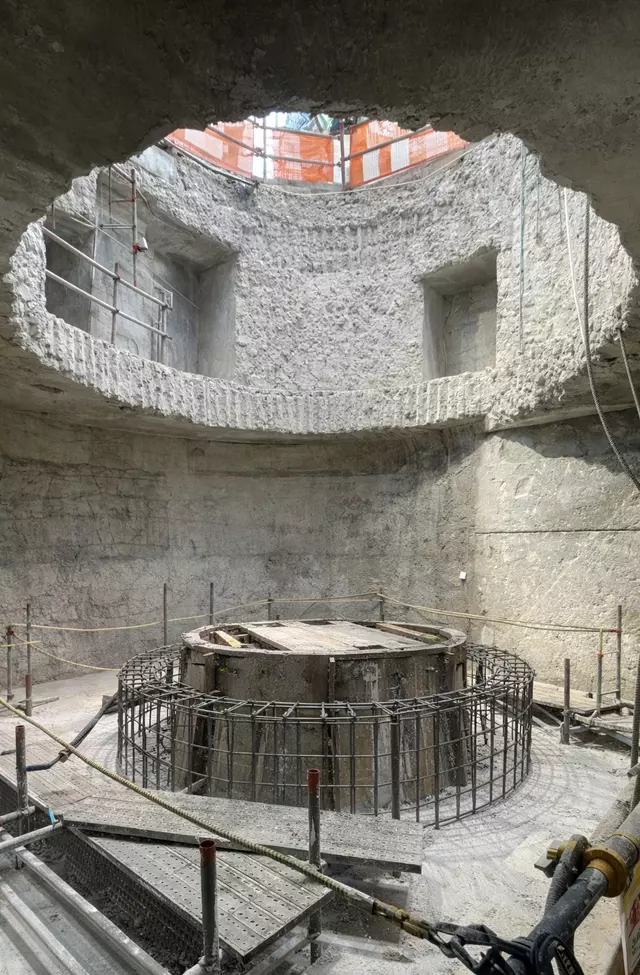
The headrace is fed into a settling basin via an open channel, followed by a rake system with a fine screen. The water then flows into the turbine intake structure and, after passing through the machine, is returned to the natural riverbed around 150 meters downstream. The integration into the terrain was carried out with strict adherence to existing structures – new concrete work was limited to selective adjustments inside the powerhouse, such as to the generator foundation and turbine chamber. The entire plant follows the principle of resource-saving use of existing facilities while maximizing operational efficiency.
The focus is on continuous, stable operation with consistent load characteristics – ideal for base load supply in the region and in line with the sustainability goals of the operator, Hokuriku Electric Power. The complex hydrological conditions of the Tedori River – characterized by steep gradients, high discharge variability, and significant sediment input were perfectly facilitated by the choice of turbine technology and adapted water way design.
Complex valve solution as project focus
The successful modernization would not have been possible without a series of well-thought-out special solutions in the area of valves and shut-off devices. The limited installation space in the existing structure and the strict environmental compatibility requirements made it necessary to design all safety-relevant components in a differentiated manner. The hydraulically controlled wicket gates within the turbine distributor were specifically tailored to the segmented turbine design. Despite the cramped conditions in the powerhouse, they enable precise control of the water flow, while also ensuring high maintainability and system availability. A special technical feature is the targeted use of facing plates – specially designed protective plates on the turbine head cover and bottom ring. These are unusual in low-pressure turbines, but were specified in this case due to the high amount of suspended solids in the Tedori River. This permanently protects the areas susceptible to erosion. This is a perfect example of how standardized technology can be flexibly and reliably adapted to challenging site conditions.
The most important measures at a glance
Sustainability as a guiding principle
The Shirayama project impressively demonstrates how sustainability in small-scale hydropower can be achieved not only through CO2-free operation, but also through resource-efficient construction and durable technology. No new concrete structures were built, no additional land was sealed, and no ecologically sensitive areas were altered. The energy is fed into the public grid, making a direct contribution to security of supply in the region. The plant is a visible component of Hokuriku Electric Power's decarbonization strategy and at the same time a symbol of the future viability of Small Hydro in a global context. The Shirayama hydroelectric power plant shows how tradition and technology, regionalism and globalism, sustainability and efficiency can be combined.